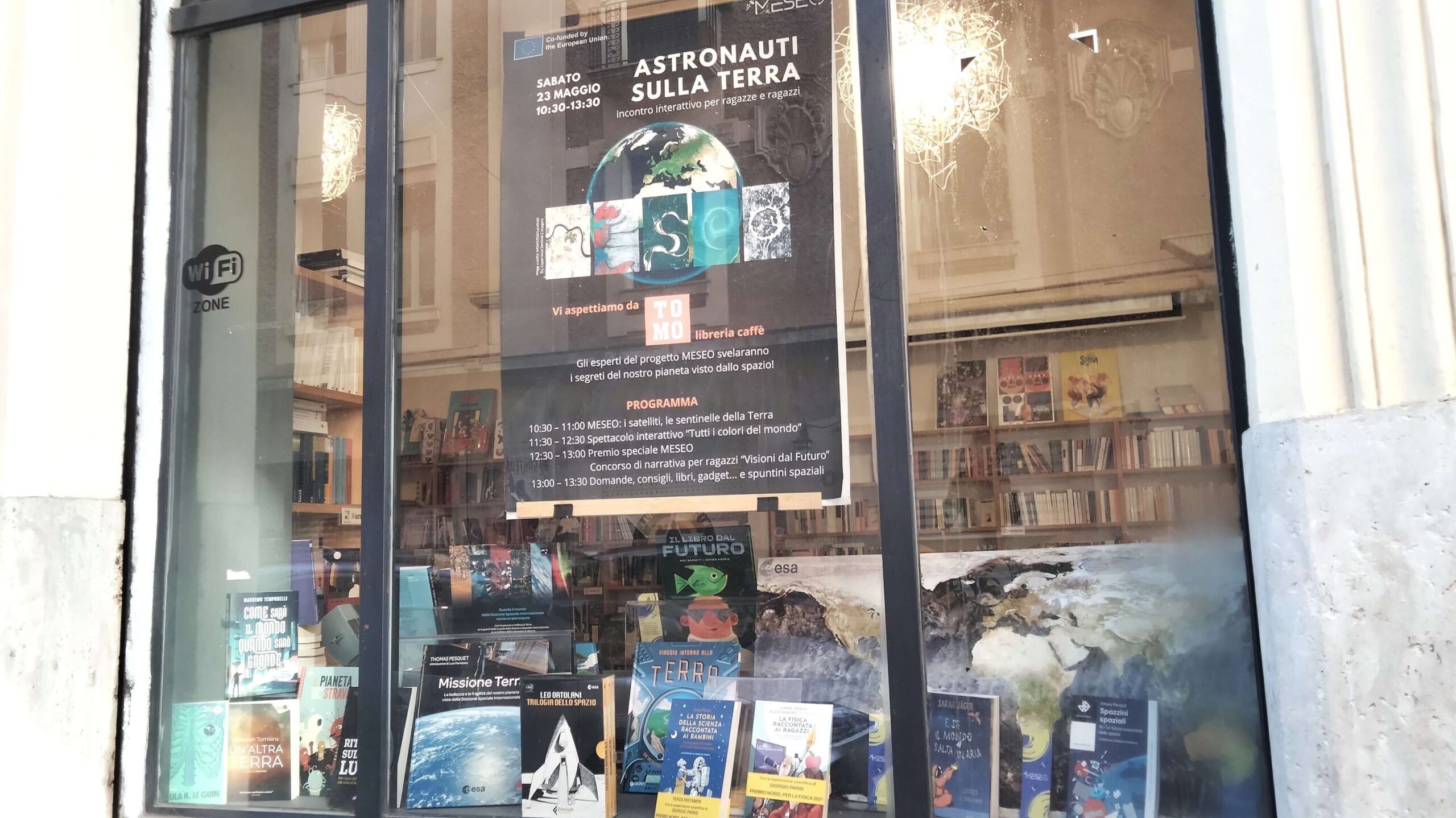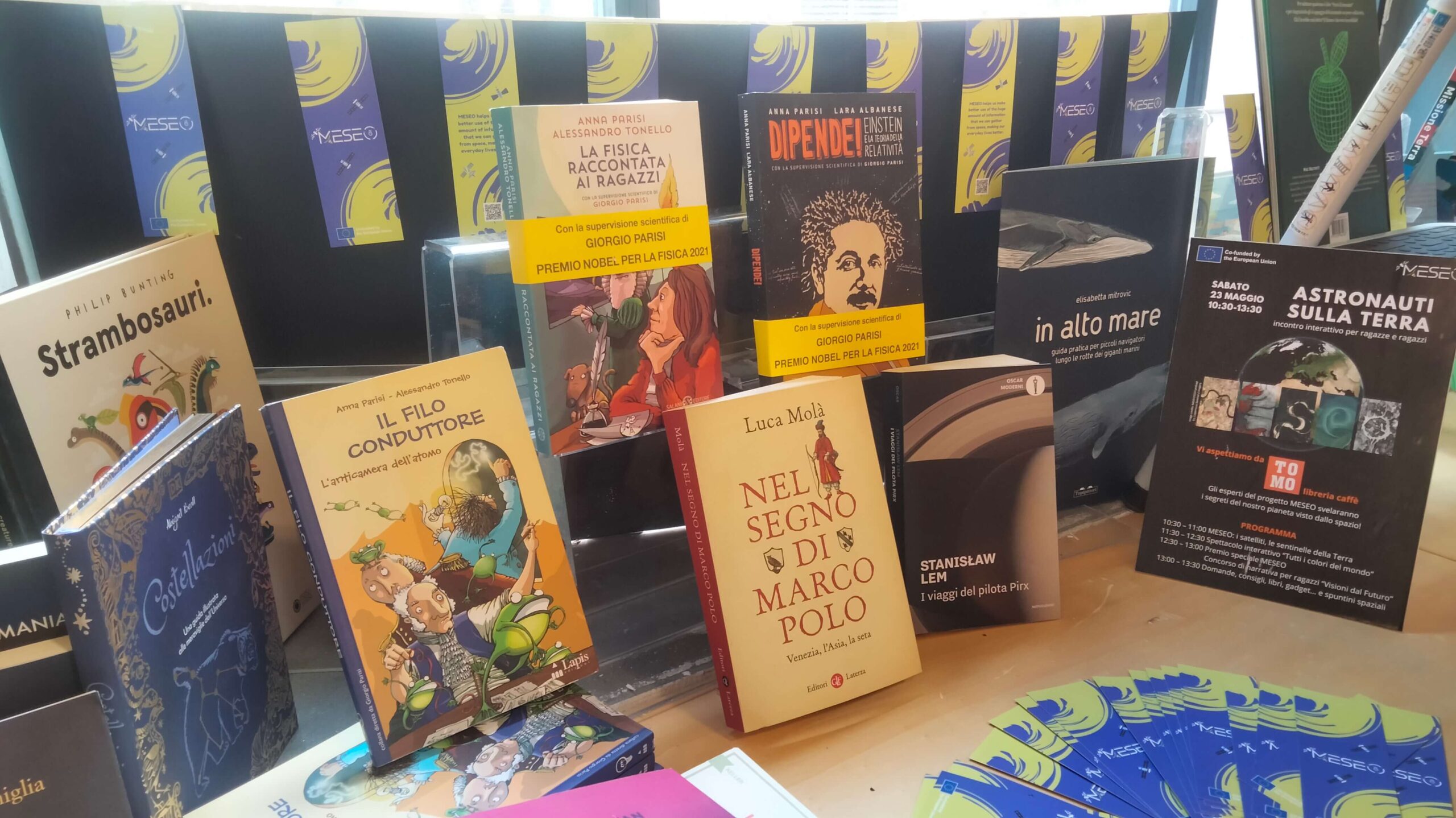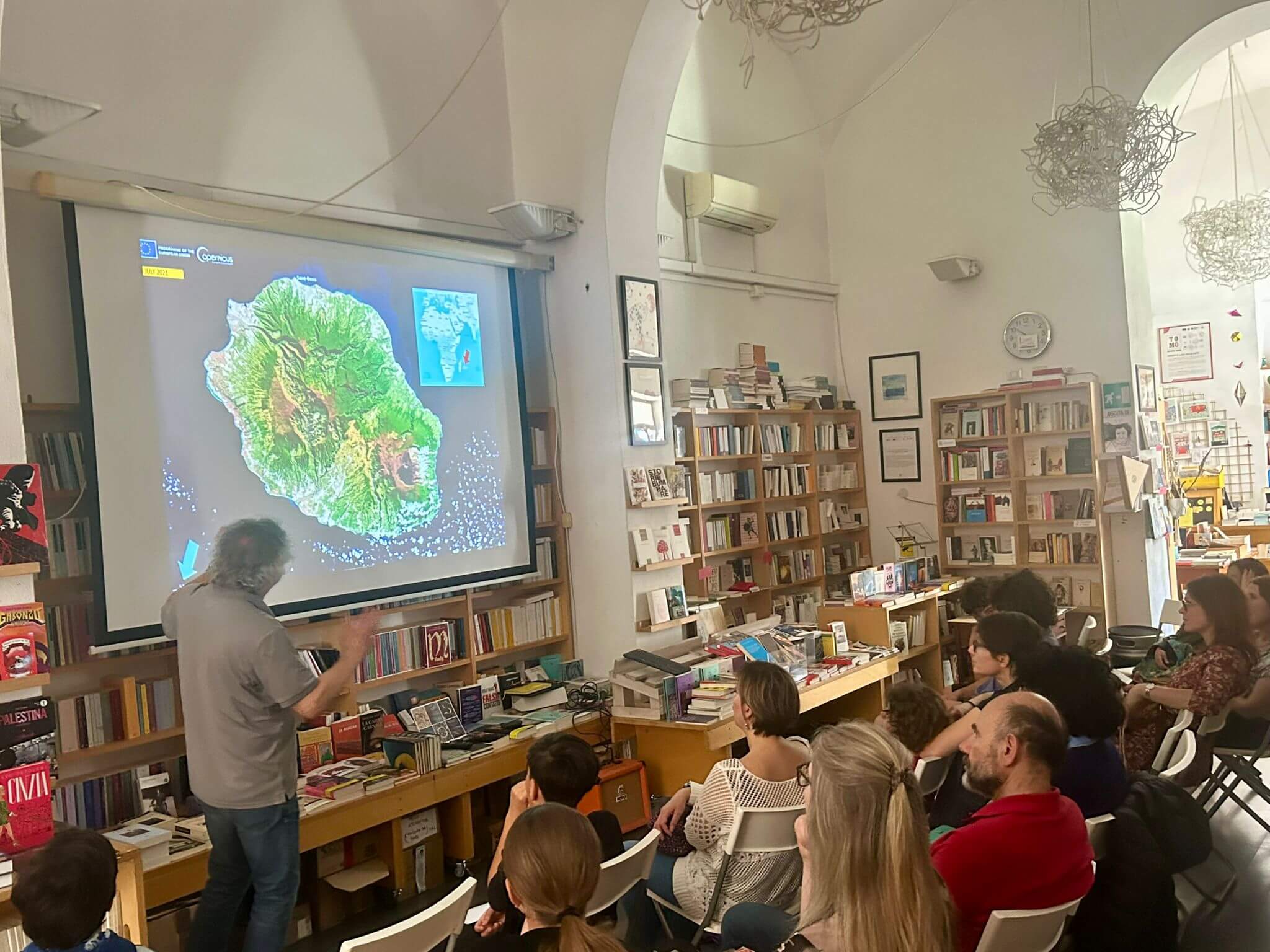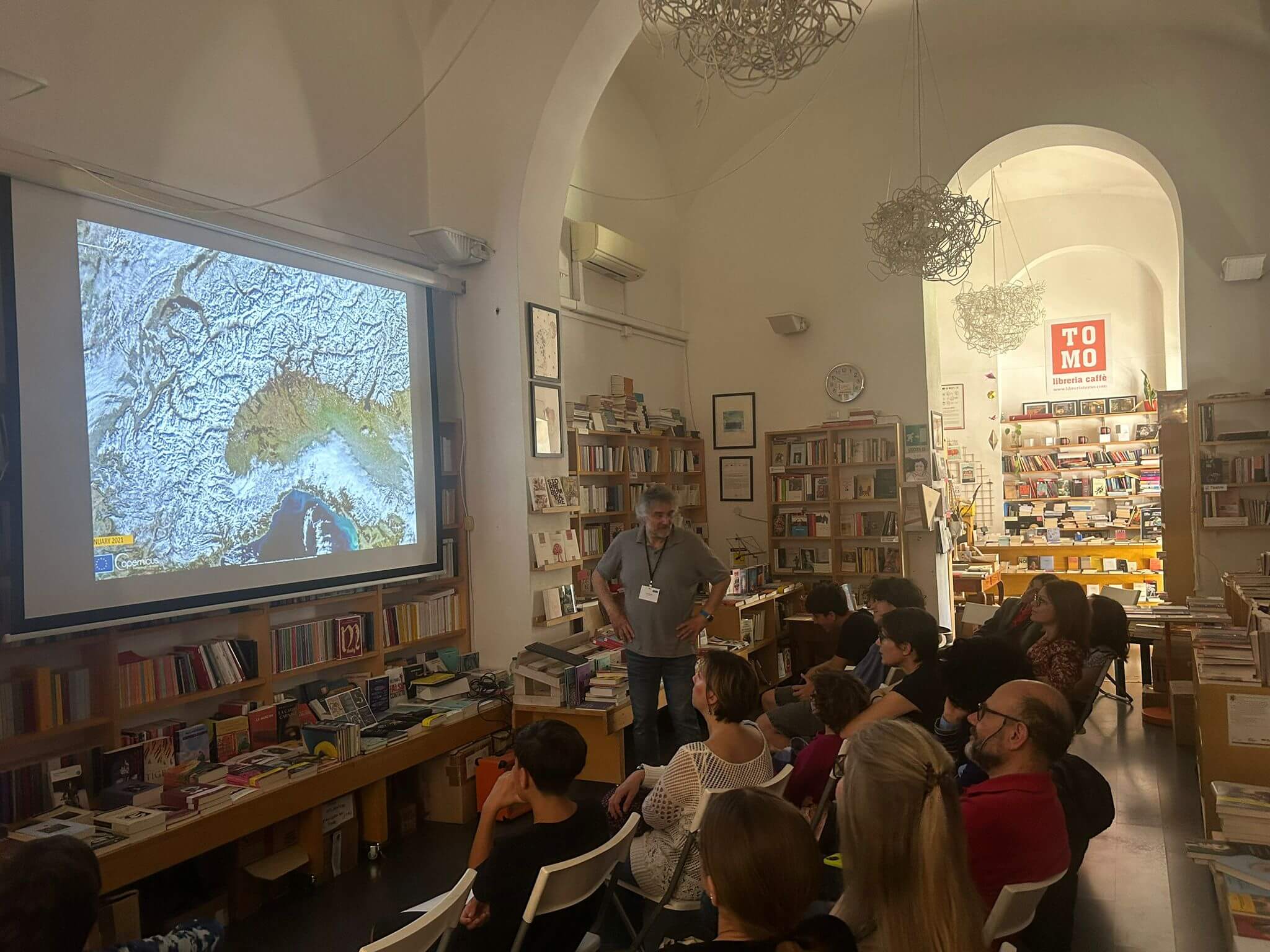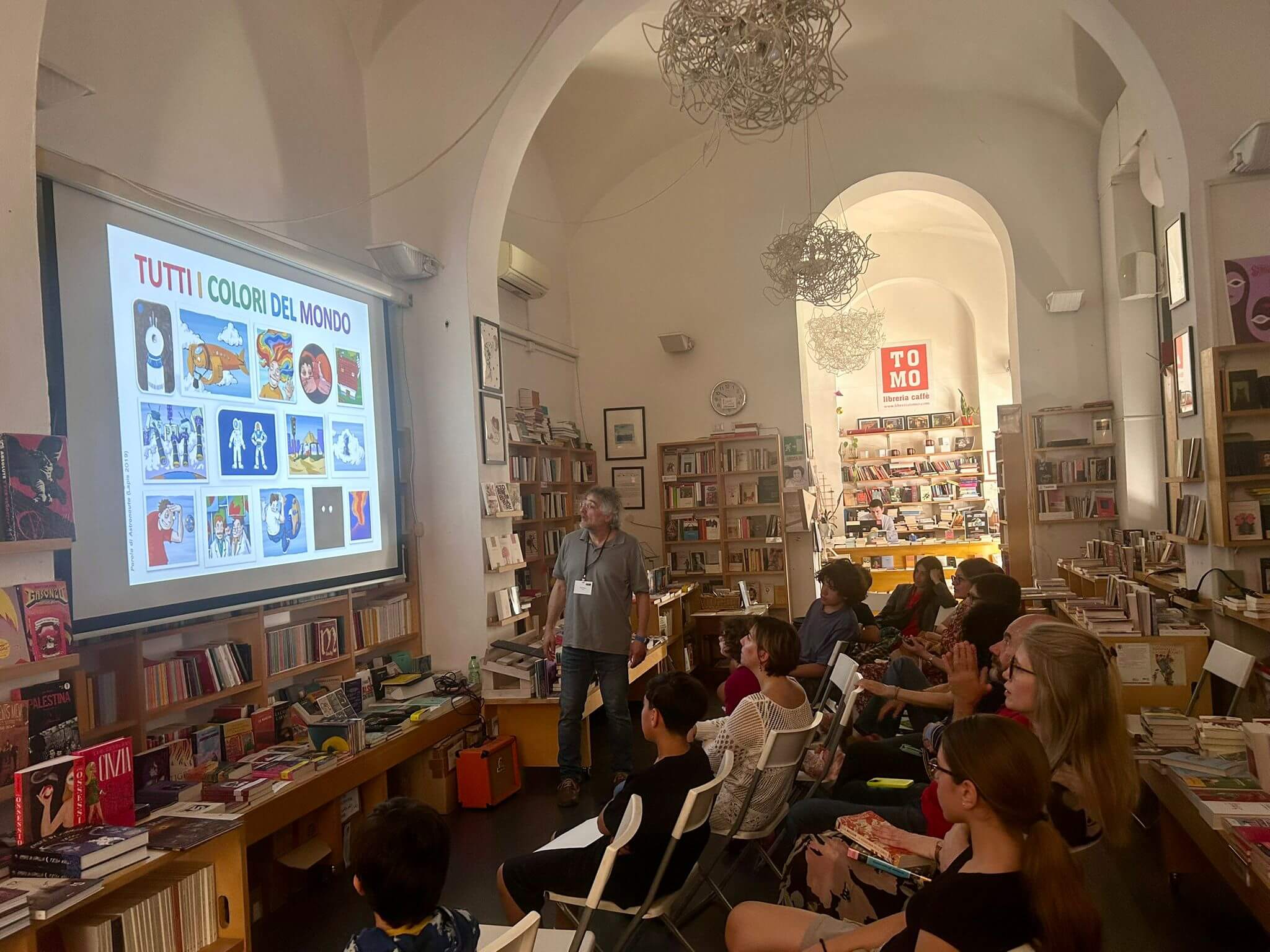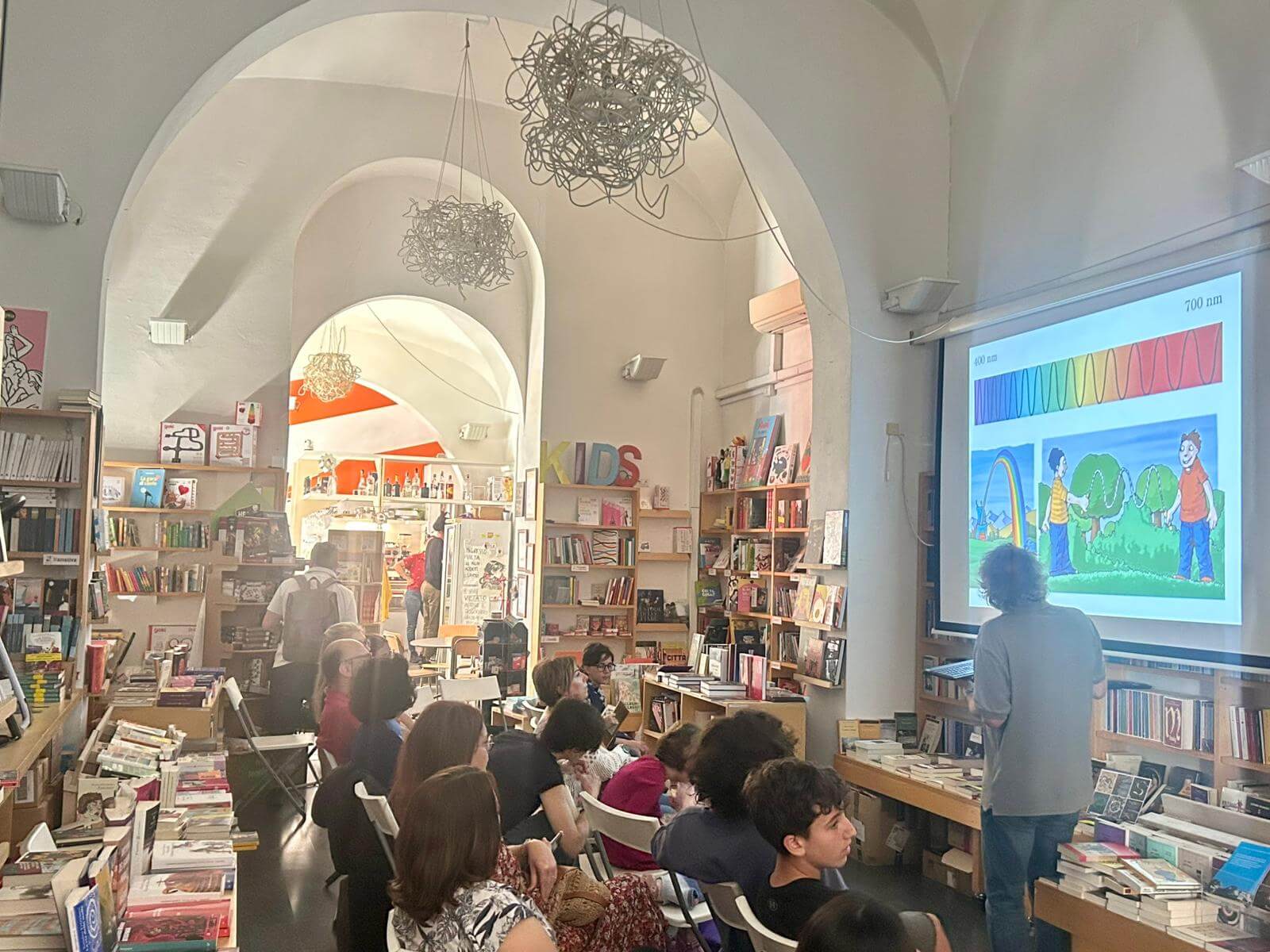

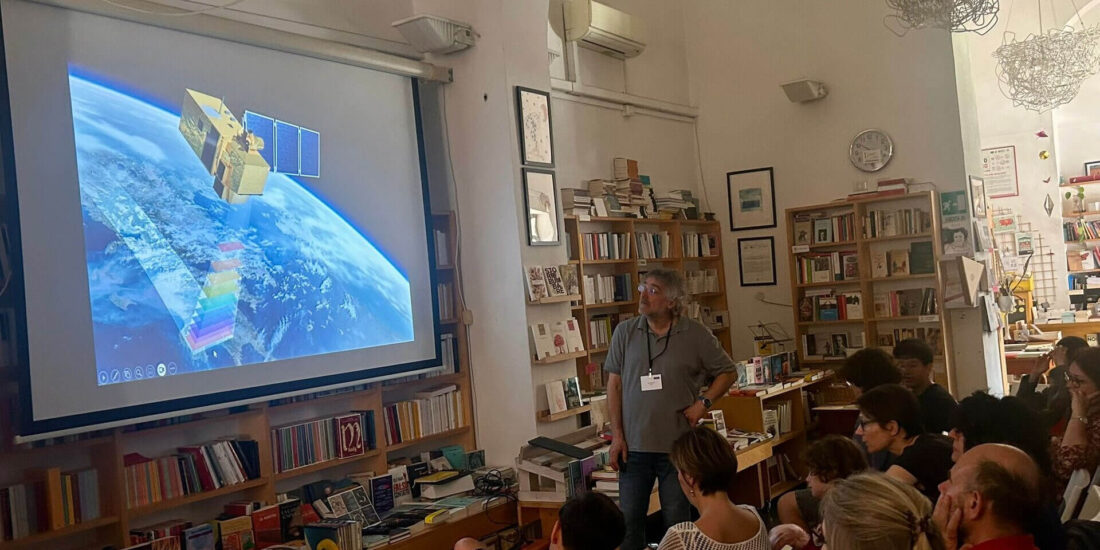
RESOLVO, Communication Manager of the MESEO project – co-funded by the European Union’s Horizon Europe programme – organized “Astronauts on Earth”, an engaging experience dedicated to observing our planet from space.
The initiative, designed primarily for high school students with the aim of bringing younger generations closer to the world of Earth observation and space technologies, was open to all science and space enthusiasts.
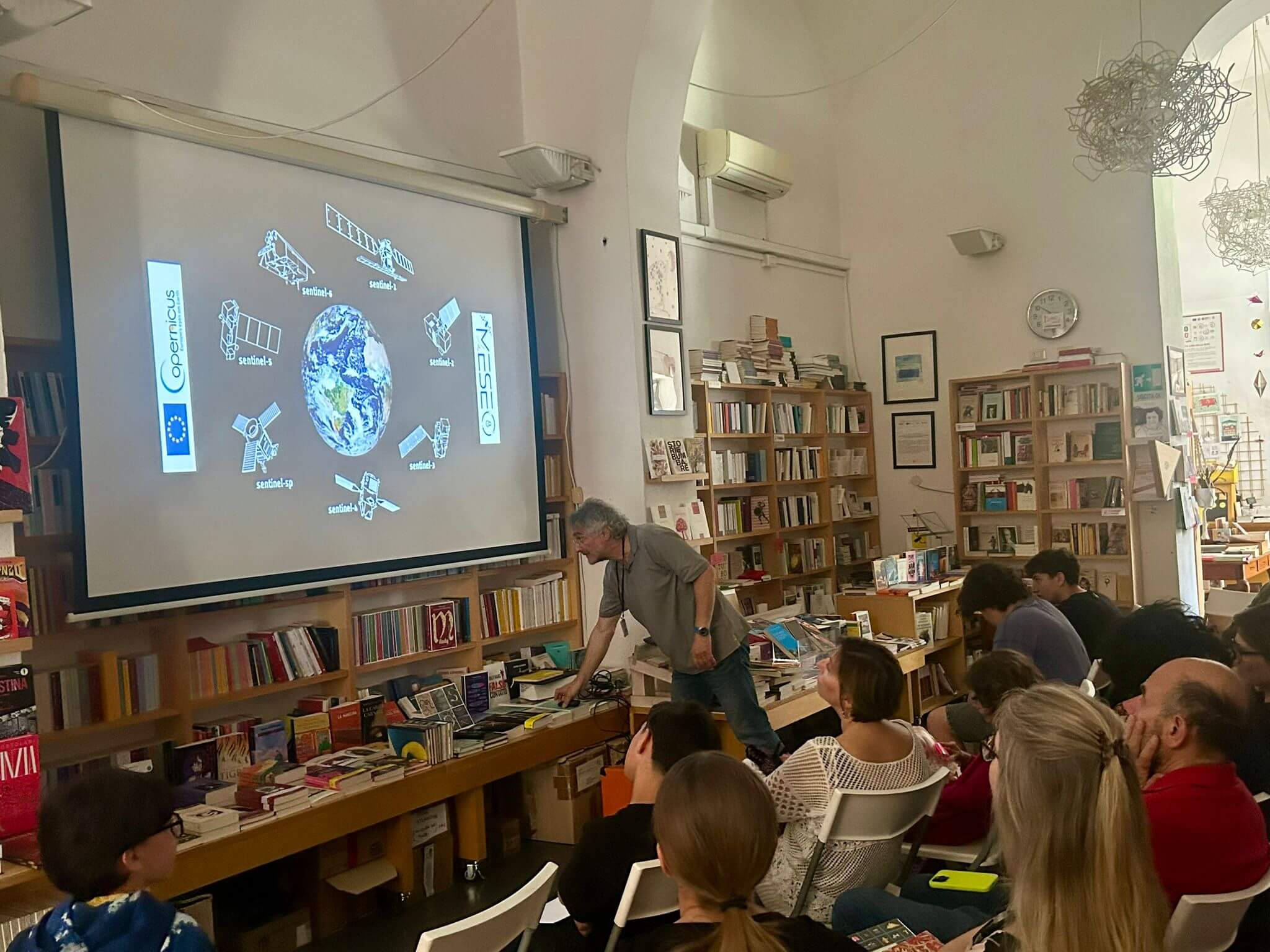
On Saturday, May 23, 2026, in the evocative setting of Tomo Libreria Caffè in Rome, children, students, and adults had the opportunity to enjoy a unique experience: observing the Earth through the eyes of European Earth observation satellites and feeling like real astronauts for a day.
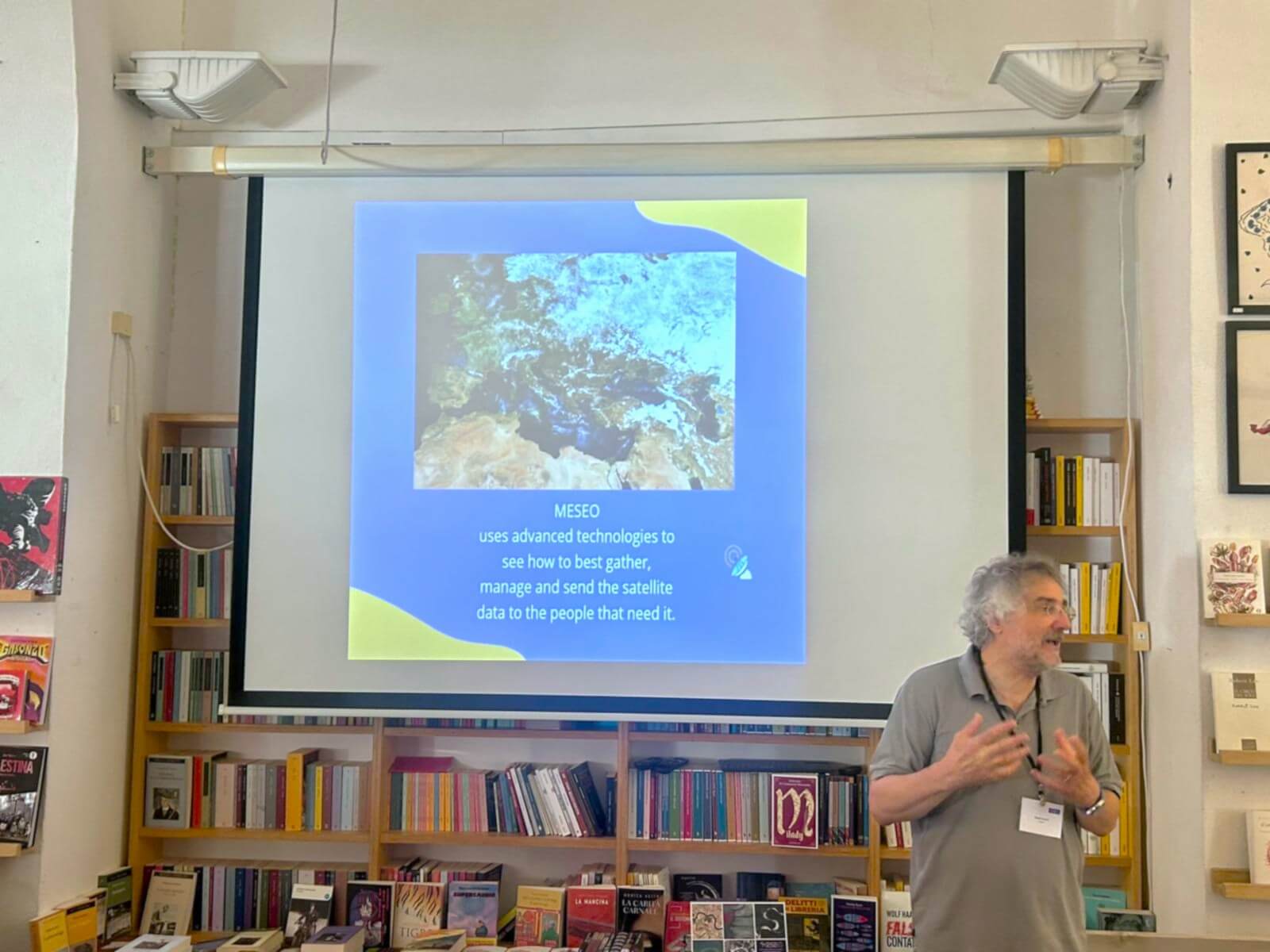
During the event, MESEO project experts guided the audience through an interactive session showing how satellites collect and process vast amounts of data that help us better understand our planet. Thanks to the satellites’ “super vision,” participants explored the most remote corners of the Earth, symbolically playing hide-and-seek with the world.
Event Programme
- 10:30 – 11:00 | MESEO: Satellites, the Sentinels of the Earth
- 11:30 – 12:30 | Interactive Show “All the Colors of the World”
- 12:30 – 13:00 | Special MESEO Award – “Visions from the Future” Youth Fiction Contest
- 13:00 – 13:30 | Questions, tips, books, gadgets… and space snacks
The event represented a special opportunity to learn, have fun, and look at the Earth from a completely new perspective, combining science communication, creativity, and participation.
Special MESEO Award – “Visions from the Future”
During the day, the “MESEO Award” was also presented as part of the “Visions from the Future” youth fiction contest, among stories set on our planet. The winning story was Earth 2.0 by Roberto Raganella.
Award motivation:
“The story addresses important themes related to technological development, first and foremost humanity’s tendency to consider the side effects of progress inevitable and therefore to constantly search for an ‘elsewhere’ to escape to. Thus, astronomers have had to retreat to remote islands, while space debris threatens the use of artificial satellites in Earth orbit. In this context, the story pushes the concept of ‘elsewhere’ to its extreme consequences: it is not only another planet, but also another ‘body’ into which humanity migrates. The ending is unmistakably Roman: the story returns to the Garbatella district!”